

Engineering and Construction Solutions
Transformer Engineering and Project Support Built for Execution
Modern industrial, commercial, and energy infrastructure projects demand more than high-quality electrical equipment. They require seamless coordination between design teams, procurement managers, and construction contractors to ensure every component fits the physical footprint and electrical design of the site. Equipment delays, late submittals, or clearance mismatches during field installation can stall construction schedules and drive up project costs.
Daelim Belefic U.S. collaborates directly with Engineering, Procurement, and Construction (EPC) firms, consulting engineers, and electrical contractors to deliver custom transformer solutions. Backed by our U.S.-based team, we provide fast engineering submittals, complete CAD models, and dedicated technical support to keep your construction timeline moving smoothly.
Comprehensive Technical Support Across the Project Lifecycle
From early design reviews to final site energization, our engineering team works alongside your project leads to streamline execution:
- Front-End Engineering and Design (FEED) Support: We assist design teams in matching transformer impedance, vector groups, thermal limits, and terminal layouts directly to site requirements and upstream equipment.
- Rapid Submittal Drawings and CAD Models: Eliminate engineering bottlenecks with fast submittal turnarounds, including dimensioned 2D drawings and 3D CAD models ready to drop into your building information modeling (BIM) software.
- Custom Enclosure and Terminal Integration: Engineered to match complex physical constraints, including top or side air terminal chambers, bus duct connections, specialized throat arrangements, and custom footprint requirements.
- Code and Standard Compliance Verification: Complete compliance verification ensuring every unit satisfies IEEE, ANSI, NEMA, CSA, and local utility interconnections before entering production.
Field Services and Construction Management Support
A transformer is a critical asset on any job site, and support cannot end when the equipment arrives at the pad. Daelim Belefic U.S. offers technical guidance and field service capabilities to support contractors during site setup:
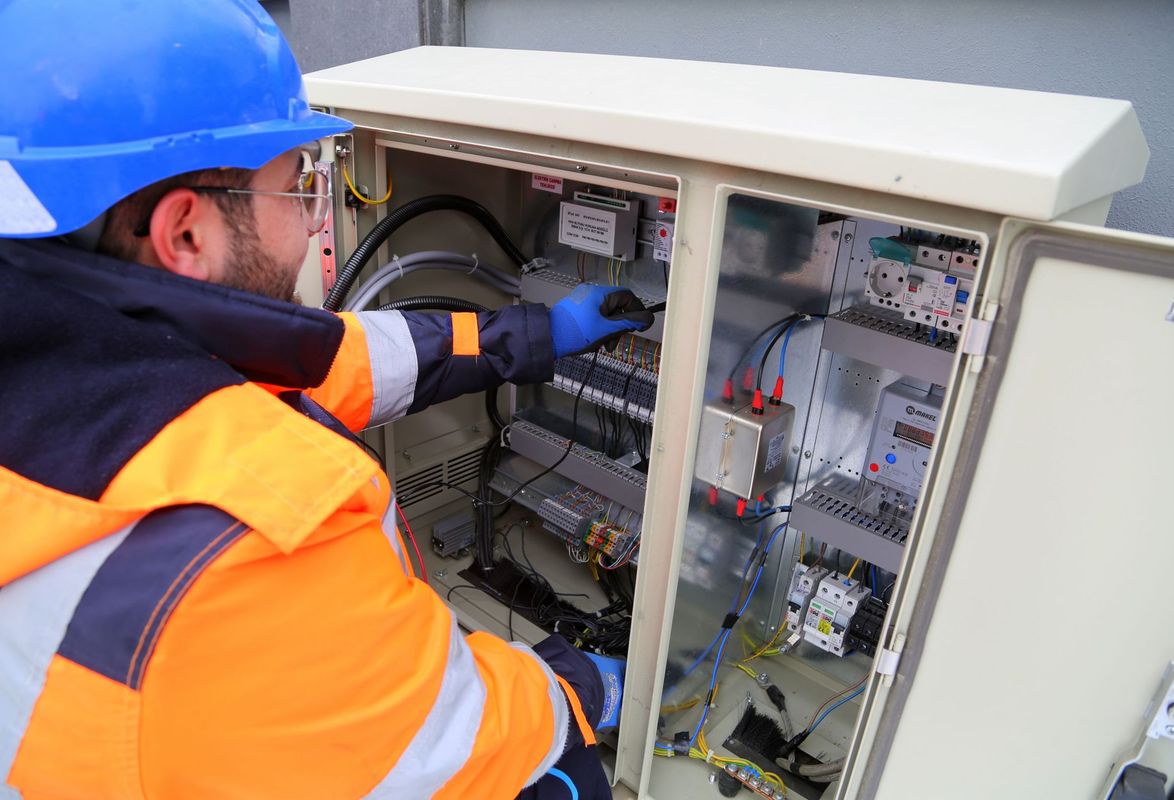
Installation Supervision and Site Inspection:
On-site or remote engineering guidance to assist contractors with proper rigging, pad placement, bushing assembly, and terminal connections.
The Daelim Belefic Safety Reminder
On-site testing support, including insulation resistance, ratio verification, winding resistance, and oil quality verification prior to energization.


Troubleshooting and Maintenance Guidance:
Direct access to Houston-based field service support to address site questions, field adjustments, or routine maintenance planning.
The Daelim Edge for Engineering and Construction Partners
Our commitment to customers comes down to four advantages:

Streamline Your Next Infrastructure Project
Keep your engineering timeline on track and your construction schedule moving forward with custom transformer solutions and dedicated U.S. support.
Got a delivery date in mind?

EPC Firm Transformer FAQs
What transformer information should an EPC firm provide when requesting a quote?
To develop an accurate transformer specification and quotation, an EPC firm should provide the required kVA or MVA rating, primary and secondary voltages, frequency, BIL, impedance, winding configuration, vector group, tap changer requirements, cooling class, transformer type, connection configuration, and applicable project standards.
Additional information may include the project single-line diagram, load profile, short-circuit requirements, utility specifications, environmental conditions, sound requirements, installation location, available footprint, cable or bus duct connections, required accessories, and project delivery schedule.
Providing complete electrical and physical requirements early in the design process allows the transformer manufacturer to identify potential conflicts before production and helps reduce engineering revisions, RFIs, and field modifications.
Can transformer manufacturers provide custom dimensions and connection configurations to fit an EPC project's design?
Yes. Transformers can be engineered around project-specific physical and electrical requirements, including custom footprints, enclosure dimensions, cable entry locations, terminal arrangements, bus duct connections, air terminal chambers, and top- or side-mounted terminations.
For EPC projects, transformer dimensions and connection locations should be coordinated with the electrical room, equipment pad, switchgear, bus duct, cable routing, structural supports, and required electrical clearances.
Daelim Belefic works with EPC firms and consulting engineers during the design process to coordinate these requirements and provide dimensioned drawings and 3D CAD models that can be incorporated into BIM and construction coordination workflows.
How early should an EPC firm involve the transformer manufacturer in the project design?
EPC firms should involve the transformer manufacturer as early as practical, particularly when the project involves custom voltage configurations, large MVA ratings, specialized terminations, limited installation space, unusual environmental conditions, or long-lead electrical equipment.
Early manufacturer involvement allows the project team to review transformer specifications, electrical characteristics, physical dimensions, clearances, connection requirements, cooling systems, and protection equipment before the design is finalized.
Early coordination can help identify potential conflicts between the transformer and other equipment, reduce redesign and RFIs, and establish a realistic manufacturing and delivery schedule that aligns with the project's construction and energization milestones.
What transformer drawings and engineering documentation should an EPC firm expect from a transformer manufacturer?
Transformer manufacturers typically provide engineering submittals that allow the EPC team to coordinate the transformer with the rest of the electrical and physical design. Depending on the transformer type and project requirements, documentation can include dimensioned outline drawings, connection and terminal drawings, nameplate data, electrical characteristics, wiring diagrams, foundation or mounting information, loss data, impedance, weights, clearances, and accessory details.
Three-dimensional CAD models can also help EPC firms coordinate transformers with switchgear, bus duct, cable systems, structural components, and building layouts during BIM coordination.
The required submittal package should be established early in the project so engineering reviews and approvals do not delay manufacturing.
What transformer services are available to EPC firms after the equipment is delivered?
Transformer support should extend beyond manufacturing and delivery. Depending on the project requirements, EPC firms may need assistance with installation, rigging and placement, field connections, pre-commissioning testing, troubleshooting, energization support, and maintenance planning.
Daelim Belefic U.S. provides technical and field service support for contractors and project teams, including guidance related to transformer installation, bushing and terminal connections, insulation resistance testing, transformer ratio verification, winding resistance testing, oil quality verification, and pre-energization inspections.
Early coordination between the EPC, electrical contractor, transformer manufacturer, and commissioning team can help identify installation issues before energization and support a smoother transition from construction to operation.