
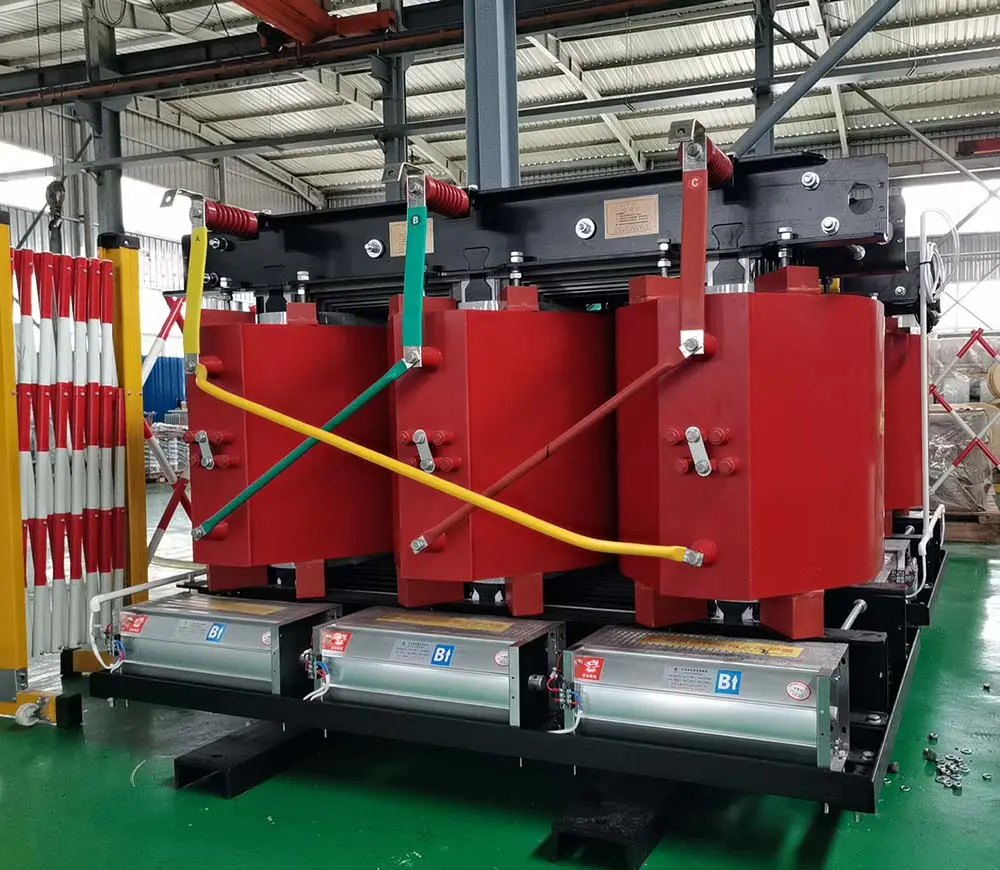
Dry-Type Transformers
Safe Indoor Power Transformation Engineered for Fast Turnarounds
Installing power infrastructure inside high-occupancy commercial towers, data centers, hospitals, or industrial facilities requires balancing strict fire safety regulations with tight construction windows. Environmental fluid risks cannot be tolerated indoors, yet waiting over a year for liquid-free indoor equipment can compromise your entire building commissioning schedule.
Daelim Belefic engineers and supplies Vacuum Pressure Impregnated (VPI) and Cast Resin dry-type transformers designed for indoor power conversion in under 30 weeks. By combining robust thermal insulation with responsive U.S. engineering support, we ensure your internal electrical infrastructure is delivered on schedule, fully compliant, and ready to support critical building loads.
Clean, Non-Flammable Power Delivery
Dry-type transformers eliminate liquid dielectric fluid, reducing fire, leak, and environmental concerns associated with liquid-filled equipment and making them well suited for many indoor installations.
Daelim Belefic dry-type units utilize high-grade thermal insulation systems engineered to handle non-sinusoidal harmonic loads from modern electronics, variable frequency drives, and UPS systems.
Our Cast Resin transformers provide a hermetically sealed coil assembly that protects against moisture, heavy dust, and corrosive airborne contaminants, making them suitable for severe industrial environments and indoor electrical vaults.
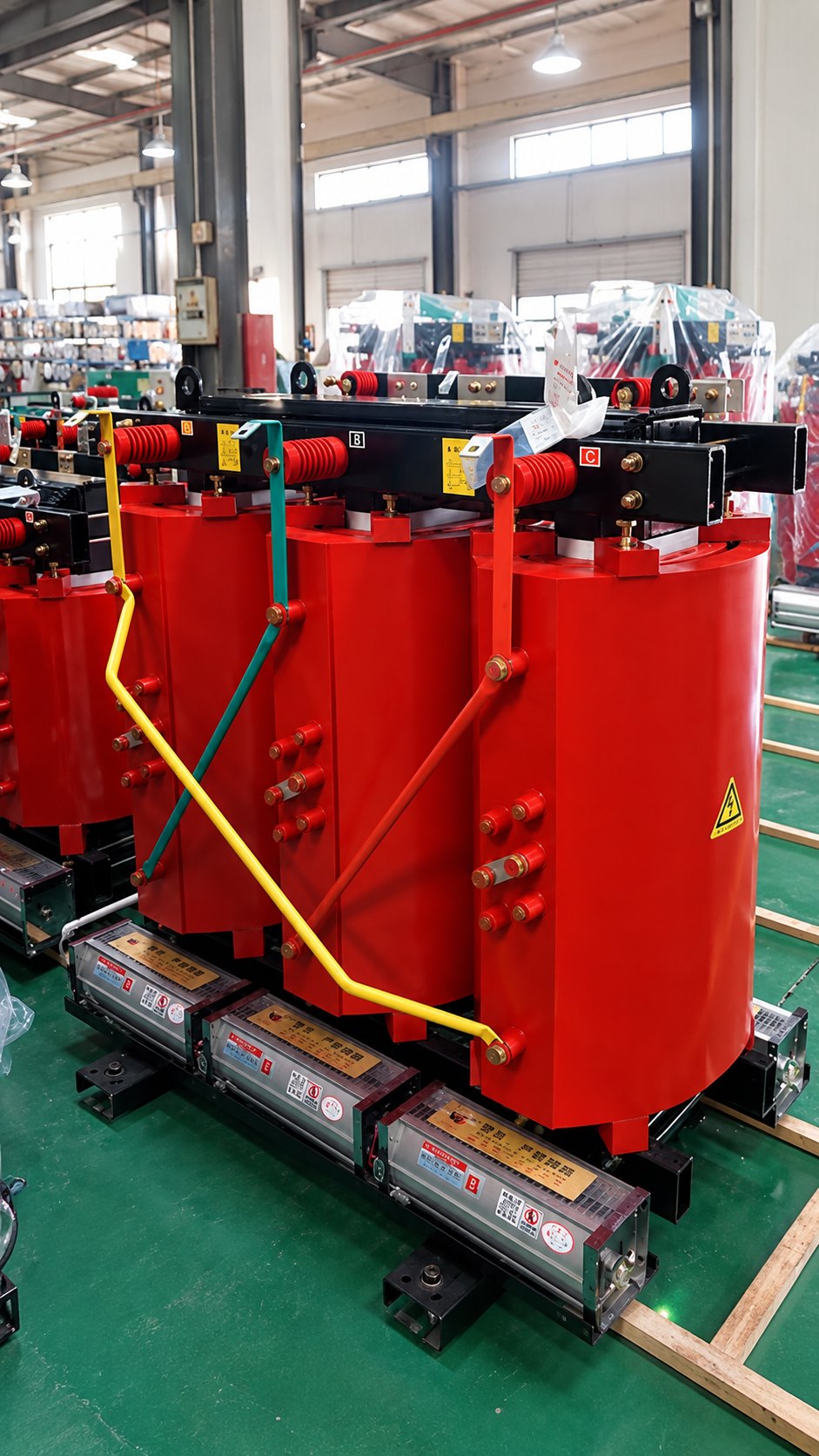
Key Equipment Specifications
- Capacity Ratings:15 kVA up to 25,000 kVA (25 MVA)
- Voltage Classes:Medium-voltage distribution up to 36 kV class
- Insulation Systems:Class H (180°C) and Class F (155°C) thermal systems
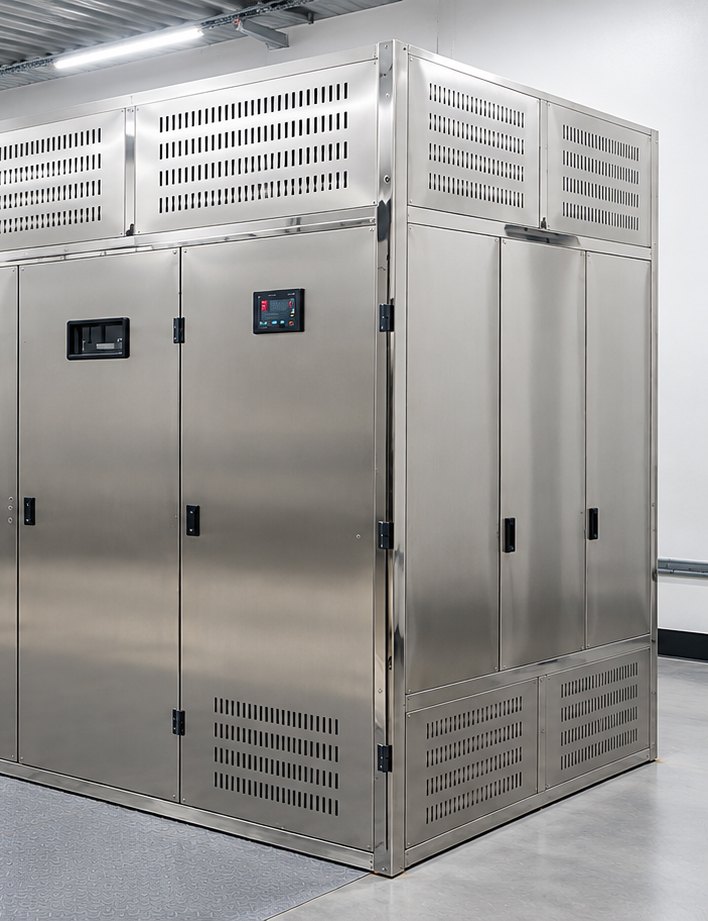
- Enclosure Options:NEMA 1 (indoor ventilated), NEMA 3R (outdoor protected), and custom IP-rated enclosures designed for specific site footprints
- Design Standards:Built in compliance with ANSI/IEEE C57.12.01, CSA C9, and IEC 60076-11
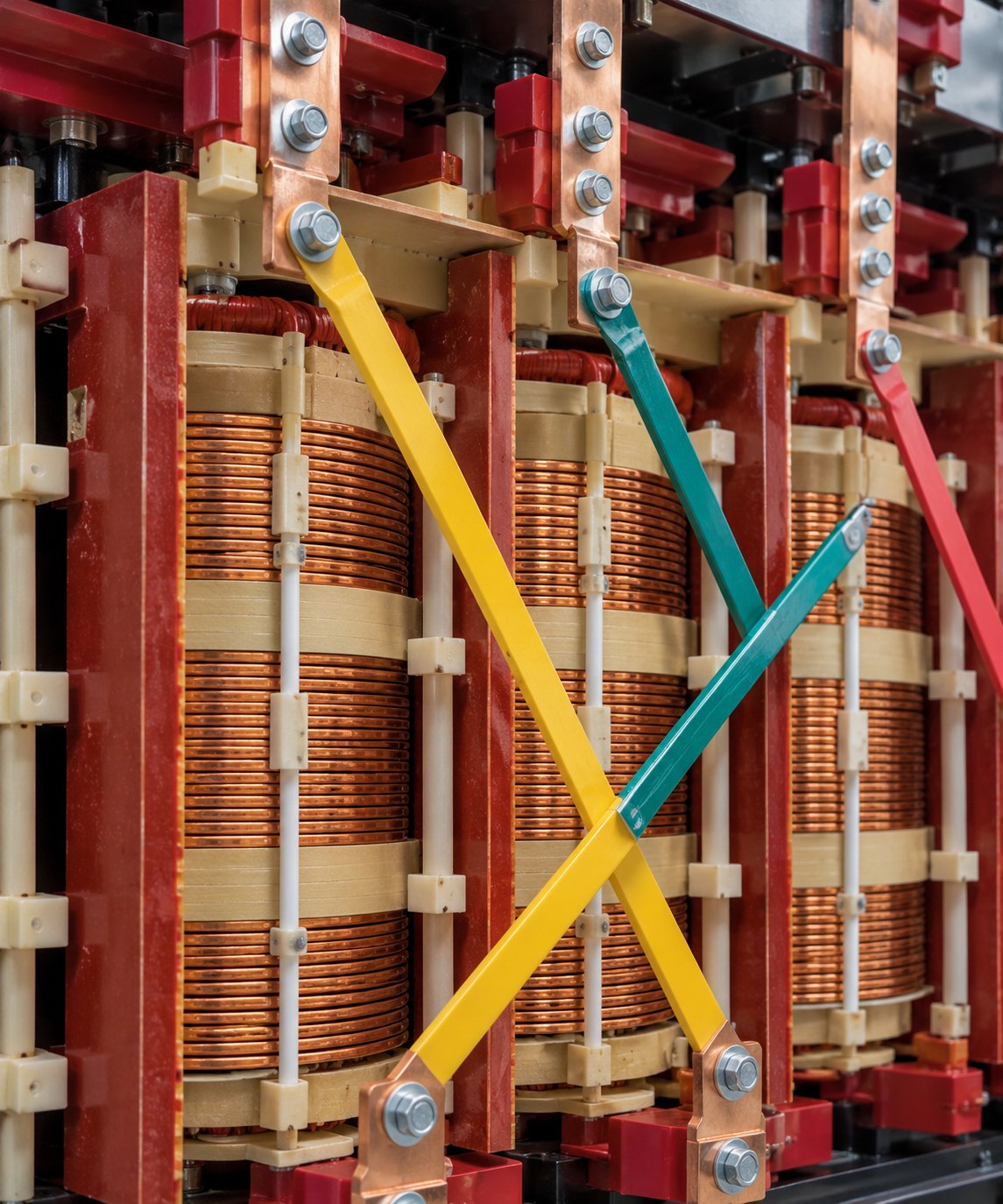
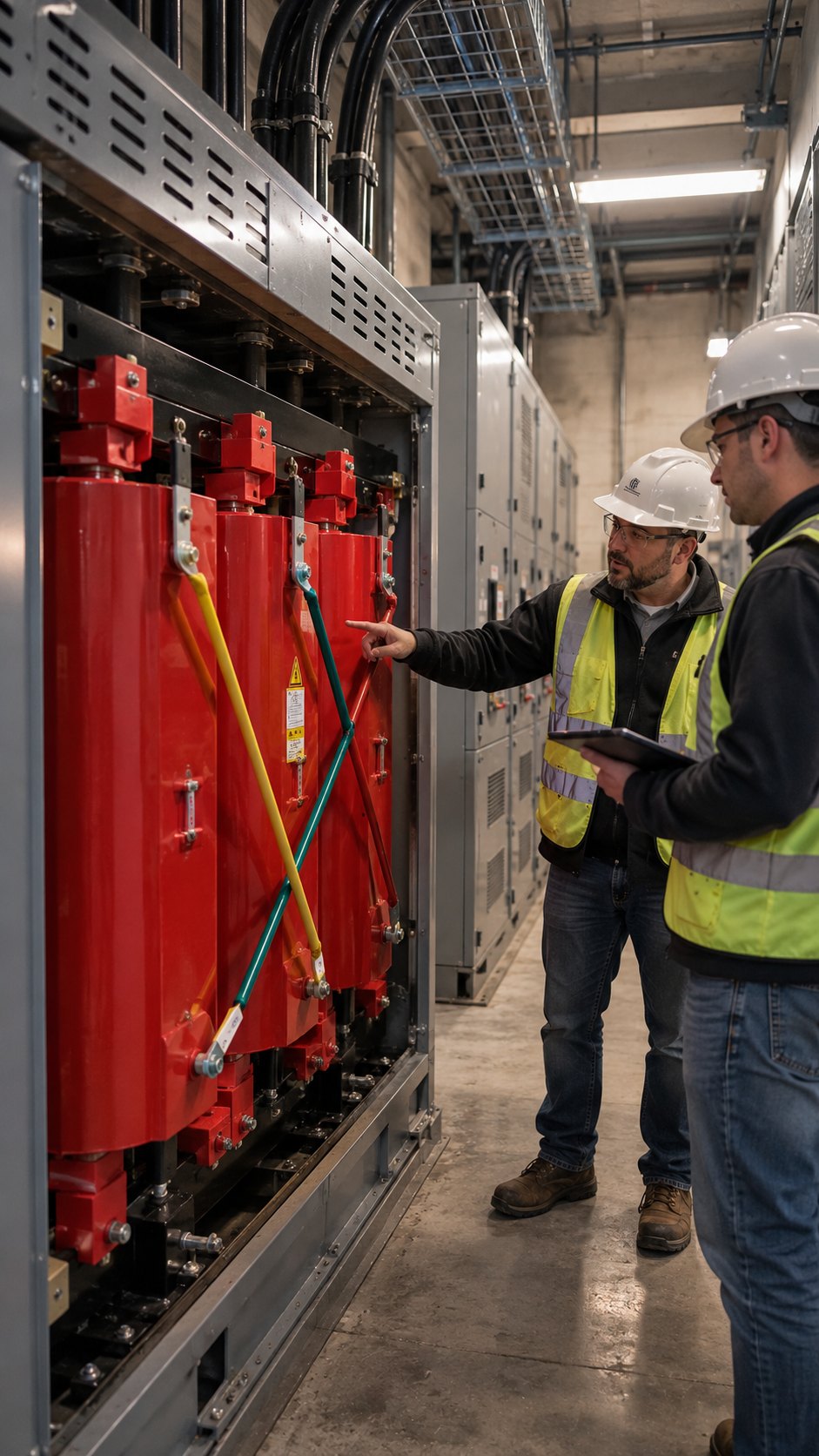
Why Engineers and Facility Developers Specify Daelim Dry-Type Units
- Enhanced Fire Safety:Flame-retardant, self-extinguishing construction ideal for high-occupancy and mission-critical indoor facilities.
- Zero Leak Risk:Eliminates environmental contamination risks and ongoing liquid maintenance requirements.
- Custom Spatial Engineering:Enclosure dimensions designed to navigate freight elevators, narrow corridors, and existing electrical room layouts.




Put Reliable Power Inside the Building
Whether you are fitting out a data hall, upgrading a hospital electrical room or adding capacity to an industrial process area, Daelim Belefic delivers dry-type transformers engineered for your space and your schedule.
Need a transformer for your next project?
Dry-Type Transformer FAQs
What is a dry-type transformer, and where are dry-type transformers used?
A dry-type transformer is an electrical transformer that uses air or solid insulation instead of liquid dielectric fluid to transfer electrical energy between voltage levels. Because dry-type transformers do not contain mineral oil or other liquid dielectric fluids, they are commonly used inside buildings and other locations where fire safety, environmental protection, and installation constraints are important.
Dry-type transformers are used in data centers, hospitals, commercial buildings, industrial facilities, manufacturing plants, institutional buildings, renewable energy systems, and electrical rooms or vaults. They can be designed for both low-voltage and medium-voltage applications and can be configured for indoor or protected outdoor installations depending on the enclosure and environmental requirements.
What is the difference between VPI and cast resin dry-type transformers?
Vacuum Pressure Impregnated (VPI) and cast resin are two different insulation and coil-construction technologies used in dry-type transformers. VPI transformers use an insulating resin that is applied to the windings under vacuum and pressure, creating a durable insulation system around the coils. Cast resin transformers encapsulate the windings in a solid resin system, providing a sealed coil assembly with strong resistance to moisture, dust, and corrosive contaminants.
VPI transformers can be well suited for commercial, industrial, and utility applications where high electrical performance, thermal capability, and serviceability are important. Cast resin transformers are particularly useful in environments where moisture, airborne contaminants, or harsh operating conditions are concerns.
The appropriate technology depends on the installation environment, voltage and kVA requirements, available space, environmental conditions, fire-safety requirements, and project specifications.
Are dry-type transformers safer than liquid-filled transformers for indoor applications?
Dry-type transformers can provide important safety and installation advantages in indoor applications because they do not contain liquid dielectric fluid. This eliminates the risk of a liquid dielectric leak and can reduce the need for fluid containment systems associated with certain liquid-filled installations.
Dry-type transformers are frequently specified for data centers, hospitals, commercial buildings, industrial facilities, and other occupied or mission-critical environments where fire safety and environmental considerations are important. Their suitability for a specific installation still depends on the transformer design, insulation system, enclosure, applicable electrical codes, and project-specific fire and safety requirements.
What kVA and voltage ratings are available for dry-type transformers?
Daelim Belefic supplies dry-type transformers ranging from 15 kVA to 25,000 kVA (25 MVA), with medium-voltage designs available up to the 36 kV class. Insulation systems can include Class F (155°C) and Class H (180°C) thermal systems, with NEMA 1 indoor ventilated enclosures, NEMA 3R protected enclosures, and custom enclosures available for specific installation requirements.
The appropriate transformer rating depends on the facility's electrical load, primary and secondary voltages, load characteristics, harmonic content, ambient conditions, available installation space, and future load requirements. For applications involving UPS systems, variable frequency drives, data center equipment, or other nonlinear loads, the transformer should be evaluated for harmonic heating and the appropriate thermal design.
What information is needed to specify or request a quote for a dry-type transformer?
For an accurate dry-type transformer quotation and engineering specification, provide the required kVA or MVA rating, primary voltage, secondary voltage, frequency, insulation class, impedance, winding configuration, BIL, enclosure type, installation environment, and applicable ANSI/IEEE, CSA, IEC, or other project standards.
For indoor installations, available electrical-room space and access restrictions are also important. Engineers should provide dimensional limitations, door and elevator clearances, required enclosure dimensions, ventilation requirements, cable-entry locations, sound requirements, and other site-specific constraints when applicable.
For facilities with nonlinear loads, such as data centers, UPS systems, and variable frequency drives, harmonic loading information should also be provided so the transformer can be properly designed for the actual operating conditions.
Daelim Belefic's U.S.-based engineering team can work with electrical engineers, EPCs, contractors, and facility owners to develop a dry-type transformer configuration that meets the electrical, environmental, and physical requirements of the project.