
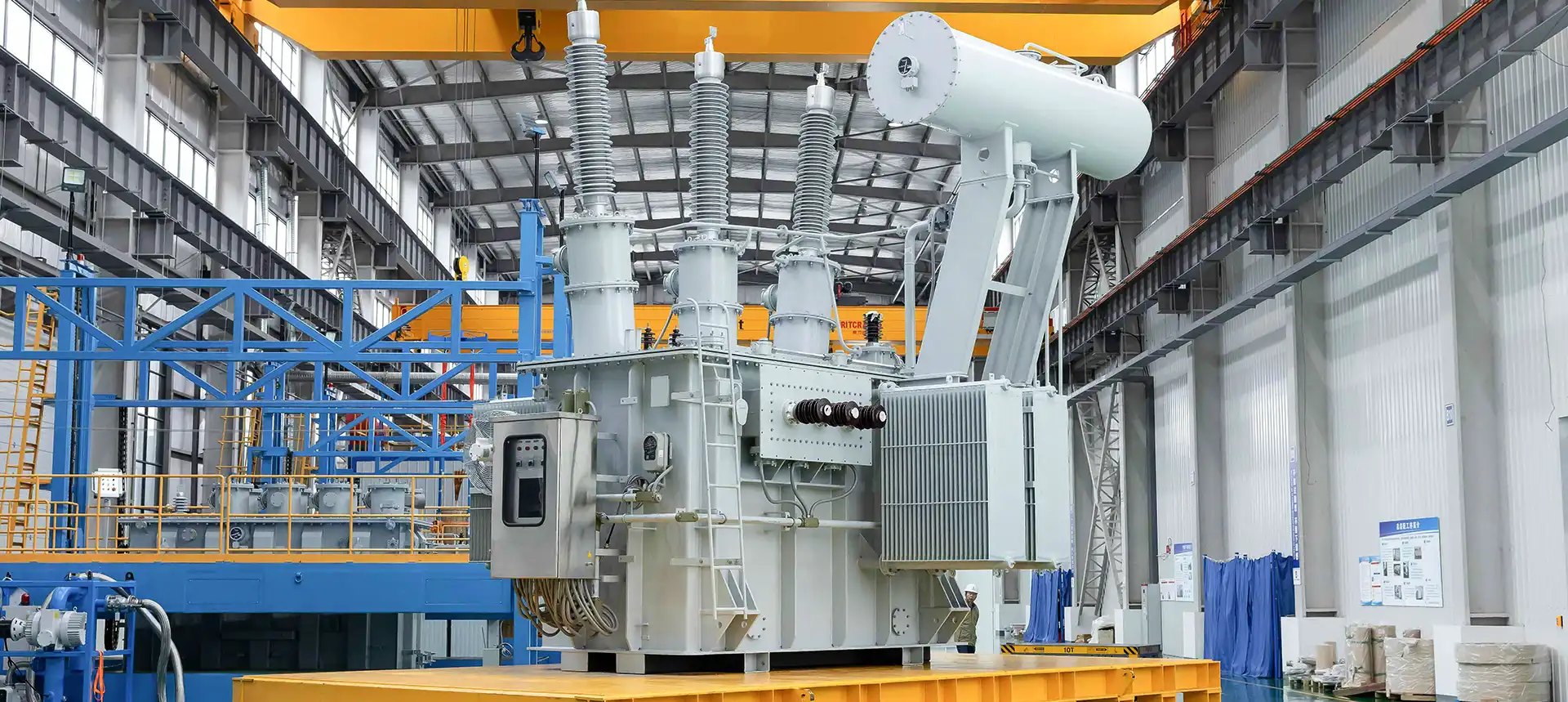
POWER Transformers
Power Transformers for Utility, Renewable Energy, and Industrial Applications
Utility transmission networks, large-scale renewable energy projects, and energy-intensive industrial facilities depend on power transformers to efficiently move electricity between generation, transmission, and distribution voltage levels. These projects require equipment engineered to withstand high electrical stresses, demanding operating conditions, and decades of continuous service.
Electrical utility planners, generation developers, and EPC firms need power transformers designed around the specific requirements of their grid connection, site conditions, load profile, and operating environment. Daelim Belefic manufactures custom high-voltage power transformers engineered to applicable ANSI/IEEE, CSA, and IEC 60076 standards. Supported by our Houston, Texas operations, we provide responsive engineering support, clear technical communication, and project-focused schedule management to help customers meet critical grid connection and commissioning milestones.
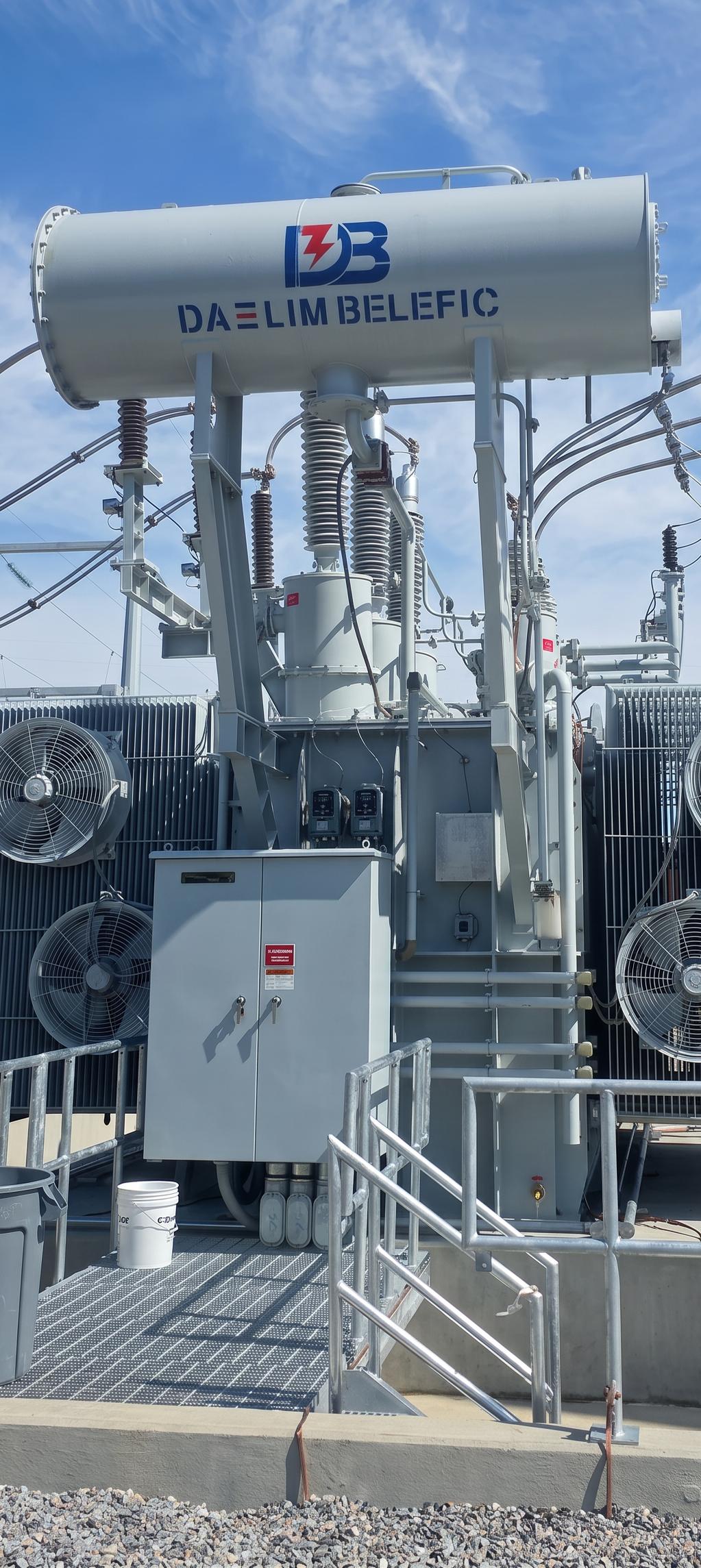
Transformers Engineered for Heavy-Duty Grid Reliability and Low Losses
Designed to handle continuous high-density loading and severe environmental exposure, our power transformers incorporate advanced structural and thermal engineering:
- Advanced Core Lamination and Loss Optimization:Manufactured using precision-stacked, high-permeability grain-oriented silicon steel cores to reduce no-load electrical losses and lower operating noise levels.
- High Short-Circuit Mechanical Strength:Features heavy-duty coil clamping, circular winding structures, and high-conductivity copper or aluminum conductors designed to withstand intense magnetic forces during external grid faults.
- Superior Thermal and Fluid Management:Engineered with optimized oil-directed cooling channels paired with natural, forced air, or forced oil heat exchangers to prevent localized hot spots and maximize insulation life.
- Custom Voltage Regulation:Configured with multi-position On-Load Tap Changers (OLTC) or De-Energized Tap Changers (DETC) to maintain stable secondary voltages during fluctuating transmission grid conditions.
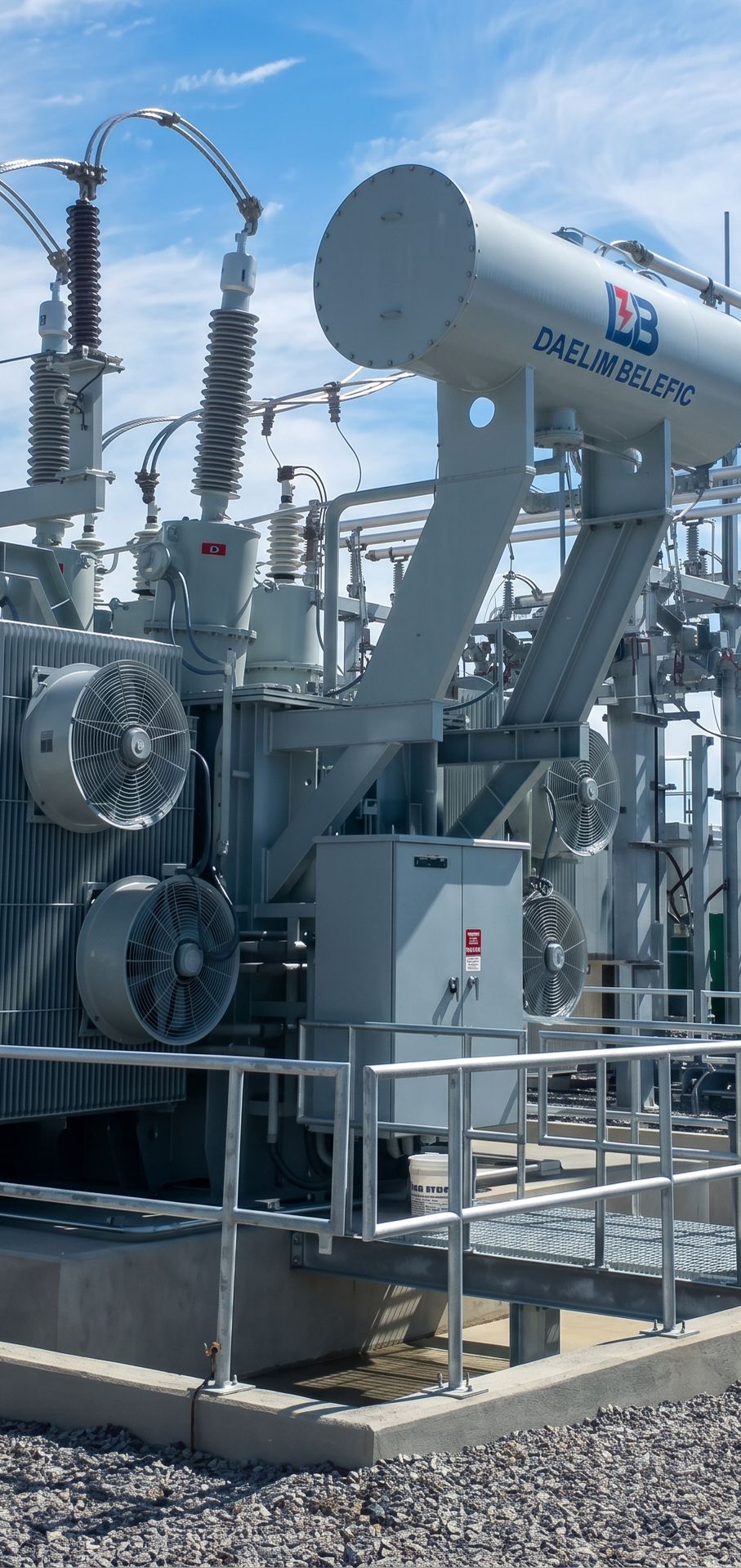
Types of Power Transformers Daelim Belefic Manufactures
Daelim Belefic builds custom power transformer configurations tailored to specific utility generation, transmission, and industrial application demands:
- Generator Step-Up (GSU) Transformers:Installed directly at power generation facilities, including gas-fired plants, hydroelectric dams, utility solar sites, and wind farms. These units step up lower generation voltages directly to high-voltage transmission levels (up to 345 kV).
- Auto-Transformers:Highly efficient power transformers featuring shared primary and secondary windings, ideal for interconnecting different high-voltage transmission networks (such as 230 kV to 115 kV systems) with minimal energy loss.
- Step-Down Transmission Power Transformers:Situated at bulk power substations to step high-voltage transmission levels down to sub-transmission or primary distribution levels for regional utilities and heavy industrial complexes.
- Collector Substation Transformers:Custom-engineered power units specifically designed for large renewable energy collector substations, accommodating harmonic currents, variable power inputs, and bi-directional load cycles.
Transformer Technical Specs and Configuration
Every Daelim Belefic power transformer is custom-built to match your site layout, environmental conditions, and grid interconnection requirements.

Power Ratings and Voltages:
Capacity ratings available up to 500 MVA, with high-voltage primary ratings extending up to 345 kV (and Basic Impulse Insulation Levels up to 1050 kV BIL).
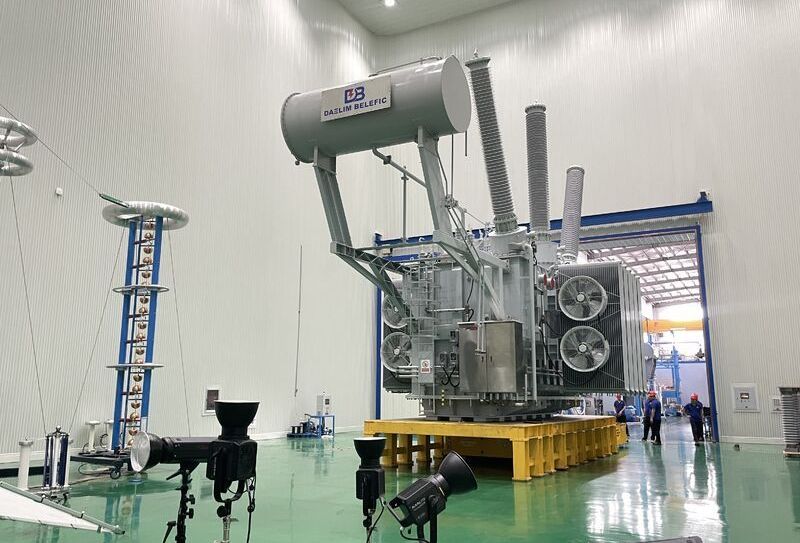
Cooling Configurations:
Available with multiple stage cooling modes including ONAN, ONAF, OFAF, or ODAF to provide flexible capacity expansion during peak demand periods.
Fluid Media Options: Supplied with high-grade mineral insulating oil or eco-friendly, high-fire-point FR3 natural ester vegetable fluid for enhanced fire safety and environmental protection.
Monitoring and Protection Systems:
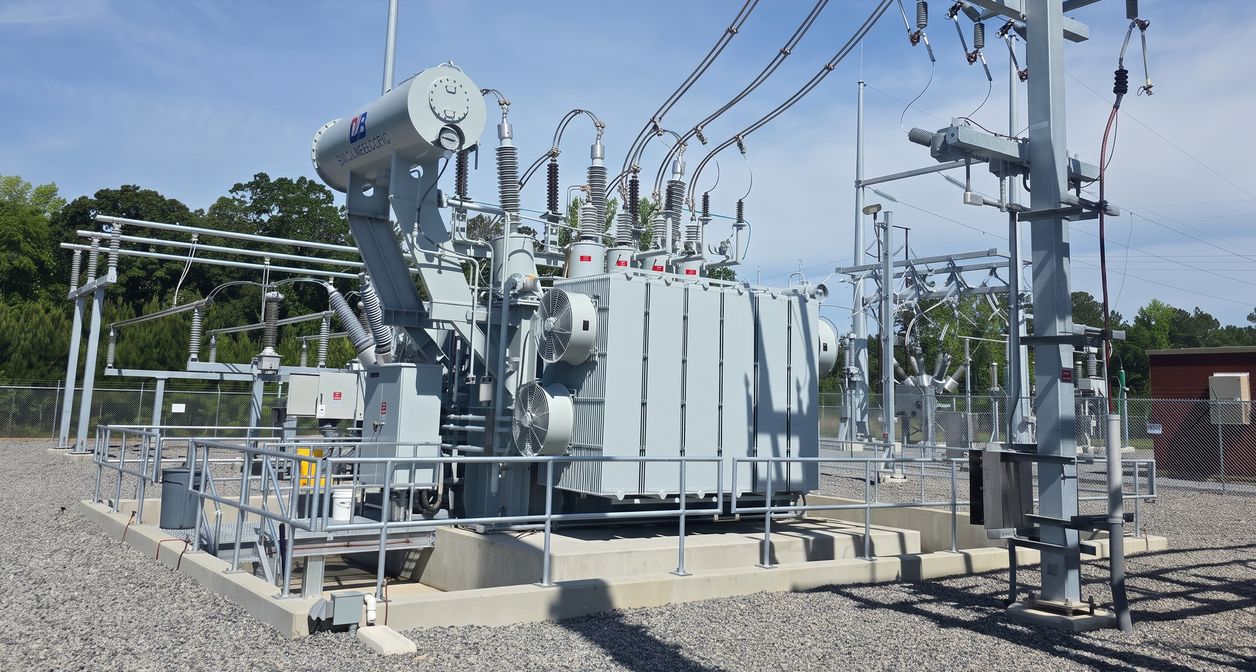
Equipped with online Dissolved Gas Analysis (DGA) monitors, fiber-optic winding temperature sensors, sudden pressure relays, magnetic liquid level gauges, and smart bushing monitoring systems for real-time asset health tracking.
Power Transformer Projects
Tailored for continuous 24/7 load profiles in Odessa, Texas, Daelim Belefic U.S. supplied 90 custom small substation transformers engineered to handle heavy harmonic stresses and dynamic power demands.




Power Your Transmission Infrastructure with Confidence
Whether you are building a new utility substation, interconnecting a utility-scale solar facility, or replacing an aging transmission unit, Daelim Belefic provides the heavy-duty engineering quality and schedule delivery your project requires.
Ready to protect your project timeline?
Power Transformer FAQs
What is a power transformer and where are power transformers used?
A power transformer is a high-capacity transformer used to transfer electrical energy between high-voltage systems while increasing or decreasing voltage levels. Power transformers are typically installed at generating stations, transmission substations, utility interconnection points, renewable energy collector substations, and large industrial facilities.
Common applications include Generator Step-Up (GSU) transformers that increase generator voltage for transmission, step-down transformers that reduce transmission voltage for regional distribution, autotransformers used to interconnect different transmission voltage levels, and custom transformers for renewable energy, data centers, and industrial applications.
Because power transformers are critical components of high-voltage electrical infrastructure, they are engineered around the specific voltage, MVA rating, fault conditions, cooling requirements, environmental conditions, and grid interconnection requirements of each project.
How do I determine the correct MVA rating and voltage for a power transformer?
The appropriate power transformer rating and voltage configuration depend on the electrical characteristics and operating requirements of the project. Key factors include the required MVA capacity, primary and secondary voltage, load profile, generator output, power factor, expected load growth, short-circuit duty, cooling configuration, impedance, BIL, and applicable utility or grid interconnection requirements.
For renewable energy and generation projects, transformer sizing should also account for the generator or inverter output, collector system configuration, expected operating conditions, and potential future expansion.
Daelim Belefic power transformers can be custom engineered to meet project-specific voltage and capacity requirements, with ratings available up to 500 MVA and high-voltage ratings up to 345 kV, subject to the specific design and project requirements.
What is the difference between a GSU transformer, autotransformer, and step-down power transformer?
The primary difference is the location and function of the transformer within the electrical system.
A Generator Step-Up (GSU) transformer increases the voltage produced by a generator to a higher transmission voltage, allowing electricity to be transmitted efficiently over long distances. GSUs are commonly used at natural gas, hydroelectric, solar, and wind generation facilities.
An autotransformer uses a shared winding for portions of the primary and secondary circuits and is commonly used to interconnect two high-voltage systems, such as 230 kV and 115 kV networks. Autotransformers can provide an efficient solution when the voltage ratio between the systems is relatively close.
A step-down power transformer reduces high transmission voltage to a lower sub-transmission or distribution voltage at a substation or industrial facility.
The appropriate transformer type depends on the electrical system configuration, voltage levels, power flow requirements, and project-specific operating conditions.
What cooling systems are available for power transformers?
Power transformers can use different cooling configurations to manage the heat generated during operation and maintain the required winding and insulation temperatures. Daelim Belefic power transformers can be configured with multiple cooling stages, including ONAN, ONAF, OFAF, and ODAF, depending on the required transformer capacity and operating conditions.
ONAN uses natural circulation of insulating fluid and natural air cooling. ONAF adds forced-air cooling through fans to increase transformer capacity. OFAF uses forced circulation of insulating fluid combined with forced-air cooling, while ODAF uses directed oil flow through the transformer windings together with forced-air cooling.
The appropriate cooling system is determined by the transformer's MVA rating, loading requirements, ambient conditions, efficiency objectives, and required continuous and emergency operating capacity.
What information is needed to specify and request a quote for a power transformer?
Power transformers are highly engineered pieces of electrical equipment, so an accurate quotation requires detailed project and electrical-system information. At a minimum, the specification should include the required MVA rating, primary and secondary voltages, frequency, BIL, winding configuration, impedance, tap-changer requirements, cooling class, vector group, neutral configuration, insulation requirements, applicable standards, and installation conditions.
How long does it take to manufacture a power transformer?
We estimate one year, but project-specific lead times vary based on MVA rating, voltage class, transformer design, materials, testing requirements, and production capacity. Most suppliers are estimating 2 to 3 years. Daelim Belefic works with customers from the initial specification through engineering, manufacturing, testing, and delivery to establish a project schedule aligned with required energization and commissioning milestones.